
Is Digital Printing Sustainable? The Real Environmental Impact of Modern Packaging!
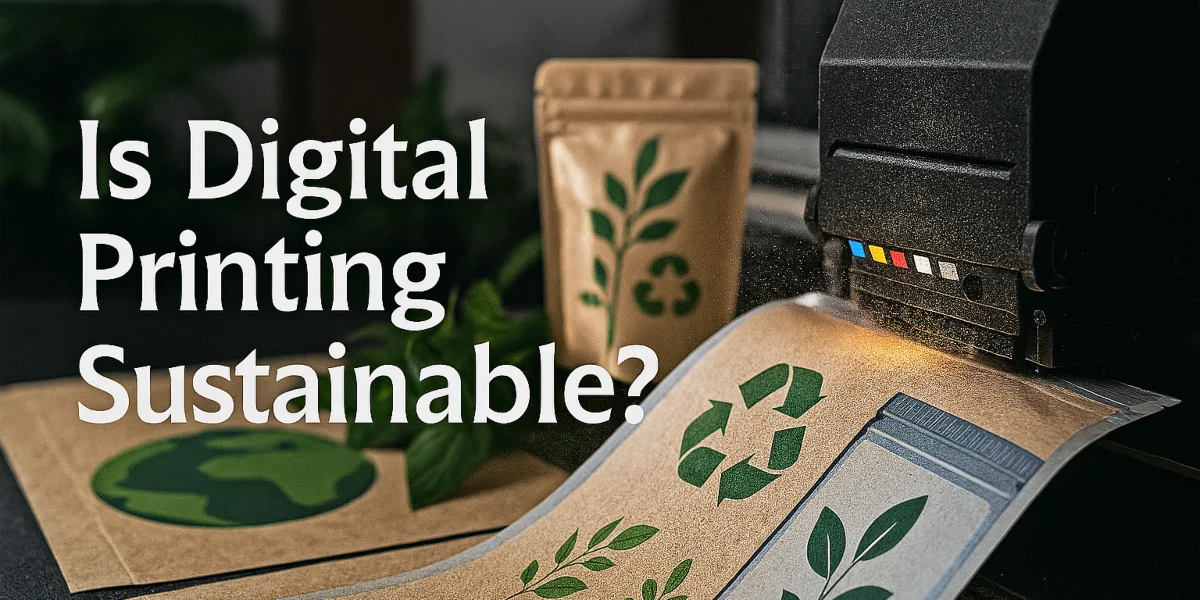
Sustainability is no longer a buzzword—it’s a business standard. From how packaging is sourced to how it’s printed, every choice impacts a brand’s environmental footprint.
According to the Flexible Packaging Association (FPA), over 80% of consumers prefer brands using sustainable packaging, and more than 70% are willing to pay more for it. But sustainability isn’t only about compostable or recyclable materials—it begins with how your packaging is printed.
That’s where digital printing changes everything. It’s faster, cleaner, and dramatically less wasteful than traditional methods like flexography or rotogravure. Here’s why it’s considered one of the most sustainable packaging technologies available today.
What Makes Digital Printing More Sustainable
Traditional print methods rely on metal plates, solvent-based inks, and long setup times. Digital printing replaces all that with direct-to-press digital files—no plates, no chemicals, no delays.
- No plates = no waste or toxic cleanup
- Uses water-based or polymer inks with low VOCs
- Requires less energy and shorter press time
- Enables short runs and on-demand production (reduces obsolete inventory)
- Compatible with recyclable, PCR, and compostable films
In short, digital printing allows brands to print what they need—when they need it—without waste or overproduction.
Digital vs. Traditional Printing: A Sustainability Comparison
| Feature | Digital Printing | Traditional Printing |
|---|---|---|
| Setup Waste | Minimal (no plates) | High (new plates per SKU) |
| Energy Use | Up to 30% lower | Higher due to long press runs |
| Chemical Waste | None (no solvents) | Requires solvent washes & plate cleaning |
| Order Size Flexibility | Print-on-demand, short runs | Large minimums to offset setup cost |
| Ink Type | Water/polymer-based, low VOCs | Solvent-based, higher emissions |
| Turnaround Time | Days | Weeks |
| Carbon Footprint | Up to 50% lower | Significantly higher overall |
Reduced Carbon Emissions
Every print job contributes to a brand’s carbon footprint. With digital printing, that footprint shrinks substantially.
- Carbon-neutral presses: Modern digital presses (like HP Indigo) are certified carbon neutral.
- Localized production: Compact setups allow regional printing to reduce freight miles.
- Lower energy consumption: Shorter runs and faster press speeds cut total energy usage by 25–30%.
The EPA estimates switching to digital printing can reduce CO₂ emissions by roughly 15,000 pounds per press annually, depending on usage volume.
No Plates, No Waste
Flexographic and rotogravure systems rely on aluminum or polymer plates that wear out and require chemical cleaning. Each redesign or label update generates new waste.
Digital printing eliminates plates entirely. Designs are uploaded directly, printed instantly, and changed on the fly. That means:
- No tooling or plate replacement
- No solvent cleaning
- No downtime between SKUs
This not only improves sustainability but also gives brands faster speed to market.
Print Exactly What You Need
Overproduction is one of packaging’s biggest environmental problems. Brands often over-order packaging to hit flexo minimums, then discard unused stock when a formula, regulation, or design changes.
Digital printing enables on-demand, small-batch production. You print only what’s needed, reducing both waste and cost.
A snack company that switched from flexographic to digital reduced obsolete packaging by over 90% and improved cash flow by freeing up storage space and working capital.
Sustainable Inks and Films
The environmental benefits go beyond the printing process itself. Digital systems use cleaner, more sustainable materials from start to finish.
- Water-based & polymer inks: Low VOCs, no hazardous air pollutants.
- Recyclable films: PE-PE or PP-PP laminations for drop-off recycling.
- PCR content: Reuses post-consumer resin, cutting virgin plastic use.
- Compostable films: Made from renewable sources like corn starch or cellulose.
Together, these materials form part of a circular economy, minimizing landfill waste and supporting measurable sustainability goals.
Localized Production, Global Benefits
Because digital printing setups are smaller and require no plates, presses can be installed closer to regional distribution centers. That reduces logistics emissions, speeds up delivery, and cuts down on packaging storage needs.
The World Economic Forum reports that localized production can lower transportation emissions by 20–30%—a significant gain for brands shipping nationwide or globally.
Real-World Industry Examples
Food & Beverage
From craft beverage labels to flexible snack pouches, digital printing helps brands reduce waste and react faster to seasonal or regional trends. Many companies in the beverage and snack sectors now rely on recyclable films and low-VOC inks to meet consumer sustainability expectations.
Health & Wellness
Plant-based and nutraceutical brands benefit from solvent-free inks and recyclable structures that align with FDA and EU safety standards. For instance, our custom vegan jerky packaging solutions allow small brands to print multiple SKUs in a single run, reducing waste and increasing flexibility—all while maintaining vibrant color and shelf appeal.
Pet Products
Digital printing gives pet brands the freedom to customize design and volume without compromising sustainability. For bird seed, treats, or supplements, recyclable pouches offer barrier protection and reclosable convenience. Our custom bird seed packaging options combine eco-friendly films with digital print precision to minimize waste while keeping products fresh.
The Bottom Line: Why Digital Printing Is the Sustainable Choice
Digital printing represents more than just a shift in technology—it’s a shift in philosophy. It allows brands to create packaging that’s cleaner, faster, and more adaptable to today’s sustainability standards.
Unlike traditional print, which demands long runs and heavy waste, digital printing makes it possible to operate leanly, locally, and responsibly. Brands save time, reduce emissions, and eliminate plate waste—all while elevating design quality and speed to market.
As regulations tighten and consumers demand eco-friendly packaging, digital printing isn’t just the greener choice—it’s the smarter business decision. It offers the flexibility to scale sustainably, respond to market changes instantly, and keep environmental impact low without sacrificing visual impact.
At Hawk Flex Packaging, we help brands bring sustainability and performance together through high-quality digital printing, recyclable films, and short-run flexibility. Whether you’re launching a new product or rebranding an existing line, our team can help you design packaging that stands out—without standing in the way of the planet. The future of packaging is digital—and sustainability is the reason why.