
Pt to MM Conversion Chart
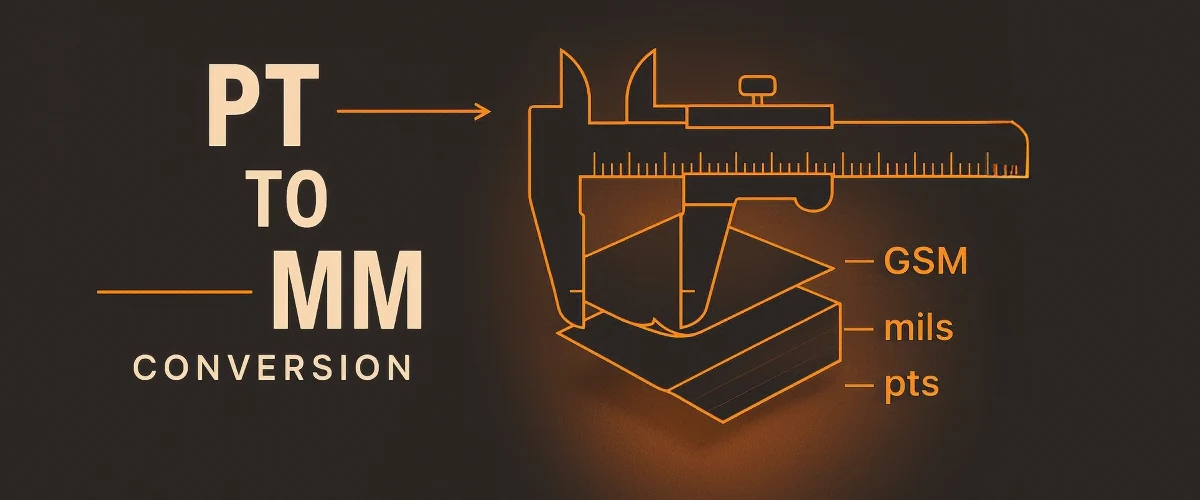
When you’re working with packaging materials, every fraction of a millimeter matters. Designers talk in “points,” converters talk in “microns,” and production teams talk in “millimeters.” Before long, everyone’s asking the same question: how thick is it, really?
That’s where a pt to mm conversion chart comes in. Whether you’re printing labels, laminating paper, or speccing new pouch material, understanding how points translate to millimeters helps you avoid costly mismatches between design intent and manufacturing reality.
What Does “Pt” Mean?
In packaging and printing, pt (points) measures thickness, not weight. One point equals 1/1000 of an inch (0.001”). The thicker the material, the higher the point value.
You’ll see point measurements most often in:
- Folding cartons (10 pt to 24 pt board)
- Label stock and hang tags
- Cardboard and paperboard packaging
For flexible packaging, points are less common than microns or mils — but the conversions still matter when aligning specs across printers and material suppliers.
Pt to MM Conversion Chart
| Points (pt) | Millimeters (mm) | Microns (µm) | Inches (in) |
|---|---|---|---|
| 1 pt | 0.0254 mm | 25.4 µm | 0.001 in |
| 5 pt | 0.127 mm | 127 µm | 0.005 in |
| 10 pt | 0.254 mm | 254 µm | 0.010 in |
| 12 pt | 0.305 mm | 305 µm | 0.012 in |
| 16 pt | 0.406 mm | 406 µm | 0.016 in |
| 20 pt | 0.508 mm | 508 µm | 0.020 in |
| 24 pt | 0.610 mm | 610 µm | 0.024 in |
| 30 pt | 0.762 mm | 762 µm | 0.030 in |
Note: Thickness can vary slightly by paper density, coating, and lamination type.
For technical details on how measurement units like points, inches, and millimeters are standardized in printing and packaging, visit the National Institute of Standards and Technology’s Weights & Measures division.
Why These Conversions Matter
Thickness determines how your packaging looks, feels, and runs on-press. A few extra points might not sound like much, but it can affect:
- Folding performance: Heavier boards crack if scored incorrectly.
- Sealing temperature: Thicker laminates need more dwell time.
- Print registration: Substrate thickness changes focus and alignment.
When specs are converted correctly, everything from die-cuts to heat-seal jaws works exactly as planned. You’ll see point measurements most often in folding cartons, label stock, and cardboard packaging used for retail and coffee products.
Real-World Packaging Examples
- 12 pt C1S Board → roughly 0.305 mm — common for paper pouches or folding cartons.
- 18 pt Recycled Board → about 0.457 mm — used for retail cartons needing rigidity.
- 20 pt Paper Laminate → 0.508 mm — typical for header cards and premium inserts.
These conversions help designers and co-packers speak the same language as material suppliers — reducing guesswork and production waste.
Conclusion: Converting Thickness Into Confidence
Knowing your pt-to-mm conversion is more than a math exercise — it’s quality control. Understanding exactly how thick your packaging stock is ensures accurate dielines, cleaner seals, and consistent shelf appeal.
At Hawk Flex Packaging, we help brands fine-tune every layer of their material — from paper weights to film gauges — so your packaging performs perfectly in both form and function. Hawk Flex Packaging supports brands nationwide, including across Arizona and Colorado, delivering fast turnaround and dependable packaging quality.