
Stick Pack vs Sachet Packaging: What’s the Difference?
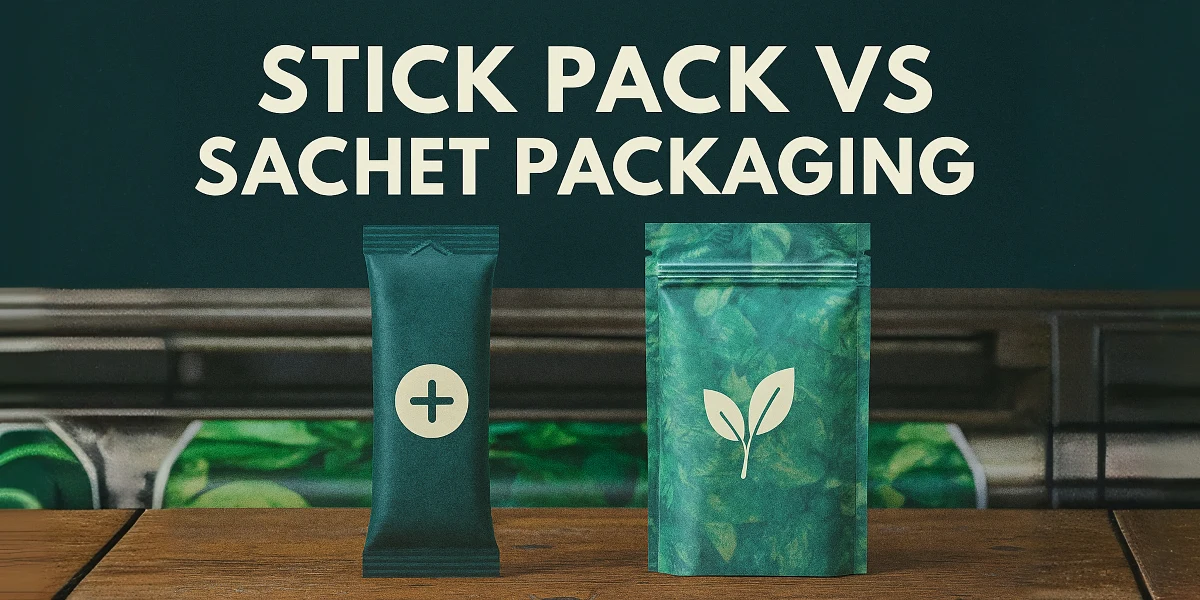
Single-serve packaging has revolutionized how consumers interact with products—from nutritional powders and energy shots to sauces, condiments, and cosmetics. It’s compact, lightweight, and portion-controlled, helping brands deliver convenience and consistency with every dose.
But when it comes to flexible single-use formats, two structures dominate: stick packs and sachets. They may appear similar, yet their design, production, and performance differ dramatically. The right choice impacts everything from material efficiency to consumer experience to your bottom line. This guide breaks down the key differences with real data, performance comparisons, and examples to help you choose the right option for your product.
Understanding Stick Packs & Sachets
A stick pack is a long, slim, tubular pouch sealed on three sides, ideal for free-flowing powders or gels. They’re most common in functional beverage mixes, coffee, collagen, and electrolyte powders—products that are poured directly into liquid.
A sachet, by contrast, is a flat, rectangular pouch sealed on three or four sides. It’s more versatile in product types, handling everything from powders to creams and liquids. Sachets are widely used in condiments, personal care samples, and pharmaceutical doses. Both deliver convenience, but their differences in geometry, seal structure, and line compatibility determine which one makes the most sense for your operation.
Industry Growth & Market Demand
Single-serve packaging is growing fast across food, supplement, and beauty categories. Globally, it’s projected to expand at a 6–7% CAGR through 2035, reaching over $20 billion in combined value. The sachet packaging market alone is expected to increase from $12.8 billion in 2024 to $19.4 billion by 2034, driven by affordability and versatility. Meanwhile, stick packs dominate in sports nutrition, coffee, and functional food applications where precision dosing, convenience, and speed are priorities. Both formats benefit from e-commerce growth and consumer demand for portability, sustainability, and hygienic single-serve options.
Stick Pack vs Sachet: Side-by-Side Comparison
| Feature | Stick Pack | Sachet |
|---|---|---|
| Shape & Opening | Long, tubular, controlled pour | Flat, wide tear for full access |
| Typical Width | 16–35 mm | 40–100 mm+ |
| Product Types | Powders, granules, gels | Powders, liquids, creams, pastes |
| Material Usage | 15–25% less film per serving | Higher due to flat geometry |
| Filling Equipment | Multilane VFFS (120–360 ppm) | VFFS/HFFS (slower for liquids) |
| Barrier Performance | Excellent for oxygen & moisture | Excellent, more options for liquids |
| Consumer Use | Easy pour into bottles or cups | Tear & squeeze application |
| Best Fit Industries | Supplements, coffee, electrolytes | Sauces, skincare, pharmaceuticals |
Film Efficiency & Sustainability
Stick packs naturally use less film per unit, giving them a measurable sustainability advantage. Studies show that stick packs reduce material usage by 15–25% compared to sachets of equal volume. Less film means lower raw material costs and less waste per serving. Both formats can now be made with mono-material recyclable films like PE-PE or PP-PP laminations, as well as post-consumer recycled (PCR) structures.
Stick packs often provide better shipping density and smaller storage footprints, which further reduces overall carbon emissions. In terms of sustainability goals, both stick packs and sachets can be engineered to support recyclability or compostability, but stick packs inherently start with a lighter footprint that benefits your logistics and carbon efficiency.
Line Speed, Throughput & Production Efficiency
Stick packs are built for volume. Using multilane vertical form-fill-seal (VFFS) systems, multiple sticks are formed and sealed simultaneously, reaching throughputs of 120 to 360 packs per minute depending on lane count and film width. Sachets are more versatile but typically slower, especially for viscous or liquid products that require careful dosing and de-aeration. For brands prioritizing high-volume output with dry, free-flowing powders, stick packs deliver faster throughput, less downtime, and more uniform sealing.
On the other hand, sachets provide the flexibility to switch between products, sizes, or fill types without major line modifications—making them a solid choice for contract manufacturers or brands running multiple SKUs on the same equipment line.
Packaging Applications & Industry Examples
Nutritional Powders & Beverages
Stick packs dominate the functional beverage market for products like instant coffee, hydration mixes, and collagen powders. Their narrow, one-handed tear and controlled pour make them perfect for mixing directly into water bottles. The slim design looks premium and fits easily in gym bags, retail dispensers, and subscription kits.
Beauty, Skincare & Personal Care
Sachets are the go-to for samples and single-use beauty treatments. Their flat shape provides ample space for branding, instructions, and ingredient callouts. For skin creams, serums, or hair masks, sachets allow consumers to squeeze out every drop while brands enjoy edge-to-edge printing for strong shelf appeal.
Food, Condiments & Sauces
Sachets excel in foods that require portion control and mess-free use—think salad dressings, ketchup, or travel-size condiments. Their easy-tear and wide-mouth design make them simple to use, even for thicker sauces. They also pack flat for foodservice or grab-and-go applications.
Health, Supplements & Pet Products
Stick packs are increasingly used for probiotics, vitamin blends, and powdered pet supplements. The slim pour design keeps dosing consistent while reducing waste. Even treats and powdered feeds for birds and small pets benefit from this structure—easy to open, easy to store, and far lighter than rigid alternatives.
For more insights or to explore sustainable packaging formats for your brand, visit Hawk Flex Packaging.
Cost Drivers & Packaging Economics
Cost comes down to more than film price per pound. Consider how each choice affects material efficiency, machine setup, SKU flexibility, and freight density. Stick packs save on film weight per serving, while sachets may need specific forming sets per size. Sachets suit brands with frequent size or formula changes, while sticks cube more efficiently to lower logistics costs.
When modeling your cost per thousand, factor in film savings, run speed, and storage volume. Many brands find that once throughput and film efficiency are included, stick packs provide a lower total cost of ownership—especially for powders and high-volume SKUs.
Shelf Life & Product Protection
For powdered applications, both stick packs and sachets can meet high barrier requirements with metallized or aluminum laminations. Stick packs have a slight edge for moisture-sensitive ingredients since the smaller internal air volume reduces oxidation. Sachets, however, offer better sealing options for liquids, creams, and pastes, making them the safer choice when dealing with perishable or temperature-sensitive products.
Design, Branding & Shelf Impact
Both structures support high-quality digital printing for short runs, test batches, and seasonal designs. Stick packs, with their tall, vertical profile, naturally fit in retail display boxes and POP trays, offering strong shelf visibility. Sachets provide more surface area for artwork, logos, and regulatory text—ideal for sample campaigns or educational inserts. With modern digital print technology, brands can achieve premium finishes without long setup times or waste, allowing multiple SKUs to print in the same production run.
Why Your Packaging Partner Matters
No matter which format you choose, the right supplier ensures the correct film structure, sealing method, and fill performance. Consistent material tension, seal integrity, and barrier control all determine how your packaging performs over time. At Hawk Flex Packaging, we work with brands of all sizes to match product requirements with sustainable packaging performance—delivering short lead times, low waste, and beautiful print results. From small trial runs to full-scale retail production, our digital-printing capabilities and film expertise make your packaging process smoother and more sustainable.
The Bottom Line: Making the Right Choice
When it comes to stick pack vs sachet packaging, there’s no universal winner—only the right choice for your product and market strategy. Stick packs excel in powder-based, high-speed applications where efficiency, dosing accuracy, and portability matter most. Sachets shine in liquid, cream, or promotional formats where surface space and tactile presentation drive value. Both can support sustainability initiatives through recyclable or PCR film structures and digital print technology that eliminates plates, reduces waste, and supports small-batch production.
Ultimately, the best solution balances performance, cost, and sustainability with your brand’s long-term goals. Whether you’re launching a hydration mix, a vitamin supplement, or a premium sample campaign, Hawk Flex Packaging can help design, print, and produce flexible packaging that elevates your brand, minimizes waste, and gets to market fast. Our team combines digital-print precision with fast lead times and proven material expertise—ensuring your packaging looks as good as it performs.